Bluebells are one of the easiest flowers to grow in shade, and one of the hardest to grow well in a hurry. Give them the right corner and they do the rest: a handful of bulbs tucked into the ground this autumn can become a small pool of blue next April, and again the year after, with barely any input from you.
The catch in a small garden is space. You cannot hand them a woodland floor. What you can do is find the shadiest, most overlooked square metre you own — under a shrub, behind a shed, along a north-facing fence — and make that their patch. Here is how to choose the spot, plant properly, and keep them coming back.
First, Check Which Bluebell You Are Planting
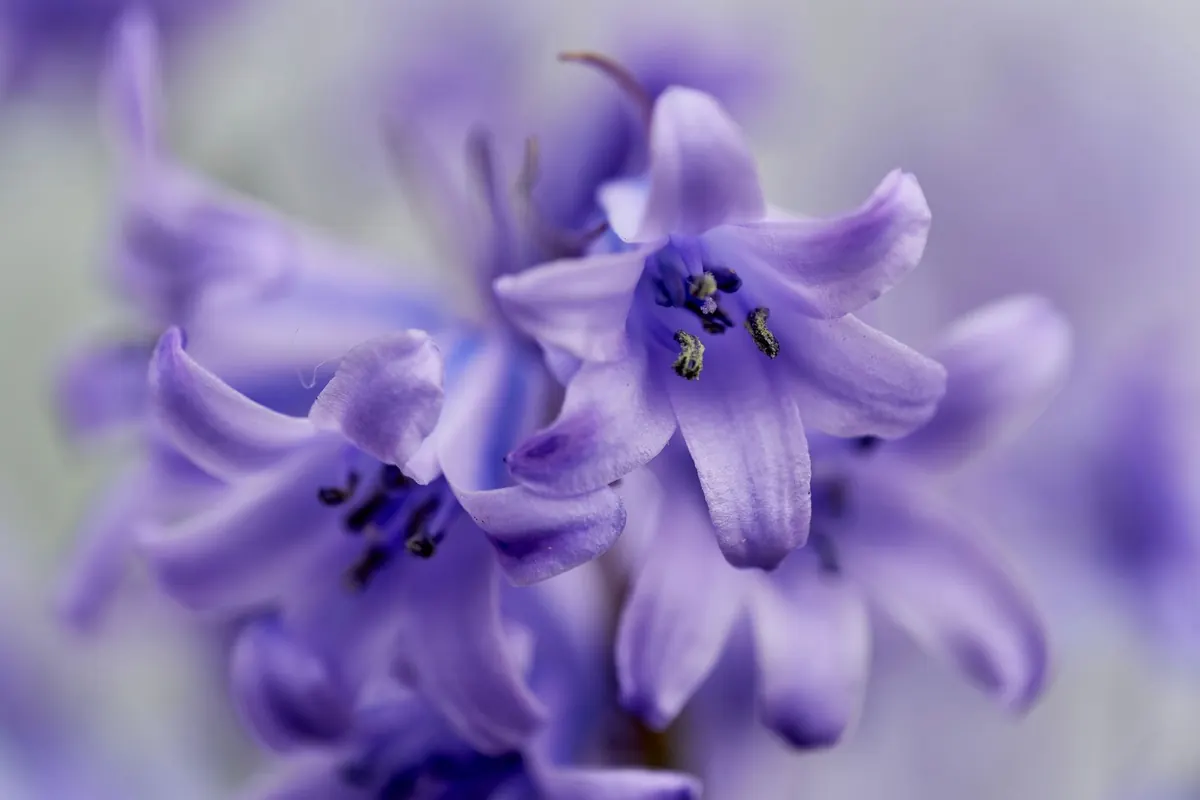
Two plants share the name, and the difference matters if you are gardening in Britain or Ireland. The native English bluebell, Hyacinthoides non-scripta, has deep violet-blue flowers that hang from one side of a nodding stem, narrow strap-like leaves, cream-coloured anthers and a sweet, slightly honeyed scent. It spreads politely.
The Spanish bluebell, Hyacinthoides hispanica, stands up straight, carries flowers all around the stem, comes in paler blue, pink and white, has blue anthers and almost no scent. It multiplies fast, seeds freely and crosses with the native species, and the hybrids eventually crowd out the original. If you already have Spanish bluebells and want natives, dig out the whole clump — bulb, leaves and all — before adding anything new, and do not move soil from that bed elsewhere. If you garden in eastern North America, you may also meet Virginia bluebells (Mertensia virginica), which look lovely in shade but want reliably damp soil and disappear completely by midsummer.
Whichever you choose, the growing method is the same.
Finding the Right Spot in a Small Shady Garden
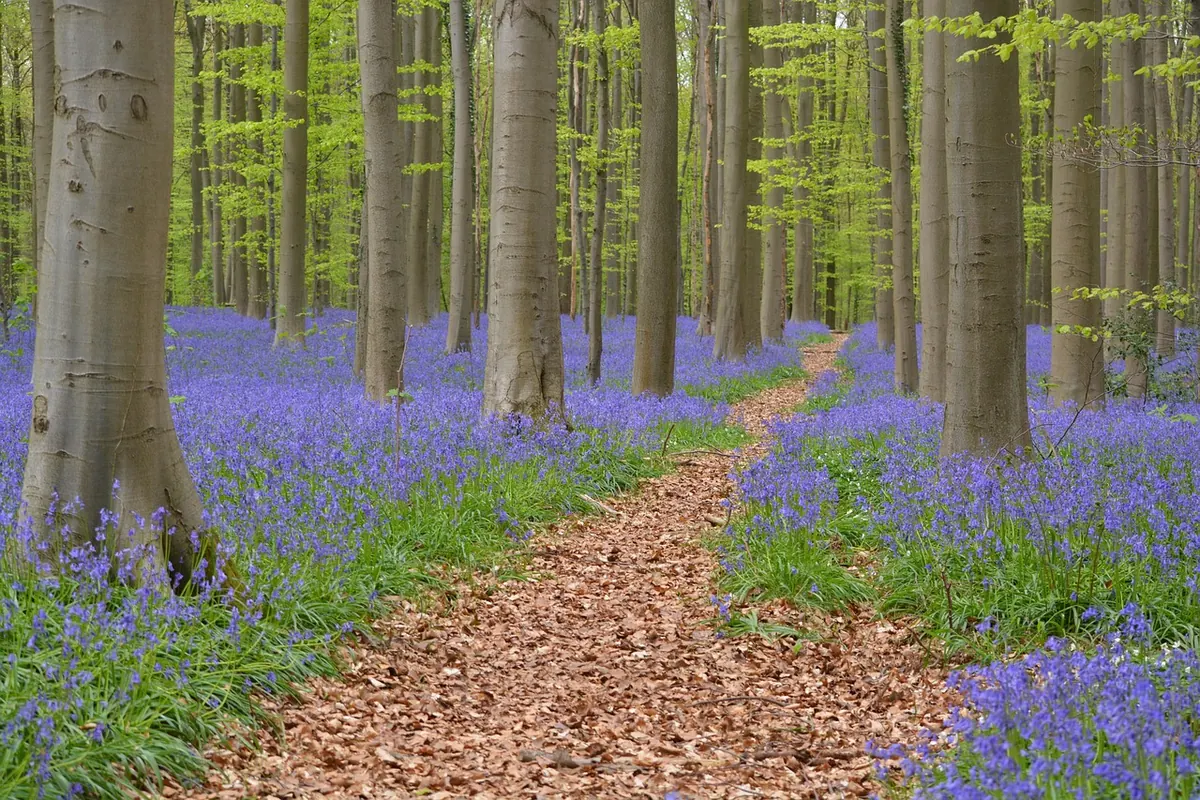
Bluebells evolved under deciduous trees, which tells you everything about where they are happy: dappled or light shade, spring moisture, and plenty of leaf litter. Under a tree or large shrub that leafs out in May, they get full light while they are growing and shade while they are dormant. That is ideal.
- Best: the strip beneath a deciduous shrub, a north- or east-facing border, the space between a fence and a hedge.
- Workable: deep dry shade under conifers or ivy. Bluebells will survive but flower thinly. Fork in two or three inches of leaf mould or garden compost first and they will thank you.
- Avoid: full sun in a hot, dry bed, and anywhere you dig or replant constantly.
Soil should be moist but free-draining and rich in rotted leaves; slightly acid to neutral suits them best, though they manage on most ground. In a small garden, think in layers. Bluebells are dormant from midsummer, so plant them under hostas, ferns or epimediums that emerge late and fill the gap. Mark the spot with a small label, because bare soil is easy to forget — and easy to dig through in August, when the bulbs are invisible.
Planting Bulbs in Autumn
Fresh bulbs go in from September to November, ideally before the end of October so roots can settle before the cold. Buy firm, plump bulbs and reject anything soft or mouldy.
- Clear weeds and fork the top few inches, mixing in a couple of handfuls of leaf mould or compost per square metre.
- Set bulbs about 10cm (4in) deep — roughly two to three times the bulb's own height — and 10–15cm apart.
- Scatter them loosely rather than lining them up. Bulbs planted where they land make a far more convincing drift.
- Plant in odd-numbered clumps of five to nine, with the clumps close enough to merge in a year or two.
- Water in and mulch with an inch of leaf mould. No feeding is needed.
To plant in grass, lift a flap of turf with a spade, tuck the bulbs underneath, and press the turf back down. Then leave that patch uncut until the leaves yellow in early summer.
Bluebells in Pots and Tight Corners
If you have no border at all, pots work well. Use a peat-free multipurpose compost mixed with a third grit or leaf mould for drainage, and set three to five bulbs in a 20–25cm pot at the same depth as you would in the ground. Keep the pot in shade and water it through spring while the leaves and flowers are growing. Once the foliage has died down, move the pot to a quiet shaded corner and let it rest; rain is fine, standing water is not. Sinking pots into a border hides the plastic and keeps the bulbs cool.
Care Through the Year
The six-week rule
This is the one thing that decides whether you get flowers next year. After the blooms fade, leave the foliage alone for at least six weeks — until it has gone yellow, floppy and flat to the ground. The leaves are feeding the bulb for next spring. Cutting them early, tying them in knots or mowing the patch in May all have the same result: leaves this year, almost nothing the next. If tidiness bothers you, plant bluebells behind something that grows up in late spring and hides the messy stage.
Watering and feeding
Water during dry spells in spring while plants are in growth. Beyond an autumn mulch of leaf mould, they need no feeding. Over-rich soil encourages floppy leaves and fewer flowers.
Dividing crowded clumps
When a clump becomes dense and flowers get smaller, lift and split it in early summer, while the leaves are still visible, and replant immediately at the same depth. This is called moving them "in the green", and it works far better than digging dormant bulbs, which are almost impossible to find.
Common Problems
Squirrels and mice dig up freshly planted bulbs; lay chicken wire over the patch, weighted at the edges, and remove it in spring. Slugs nibble the leaves in wet weather but rarely do real damage. The biggest cause of decline is not disease at all — it is early mowing and early cutting.
One safety note: all parts of bluebells, and especially the bulbs, are toxic if eaten. Keep them away from pets and small children, and wash your hands after handling a large batch. If you are unsure whether a plant in your garden is safe around animals, ask your vet.
A Simple Plan for This Autumn
Pick one patch of dappled shade, roughly a metre square. Clear it, fork in some leaf mould, and plant twenty to thirty bulbs in loose drifts. Water, mulch, label, and then do nothing at all until spring. When the flowers open, resist the urge to tidy. Let them run to seed, let the leaves collapse, and mark the date you last saw green foliage so you know when the patch is safe to cut.
Do that once and you have a bluebell patch for good. They will multiply quietly on their own, and in three or four years you will be dividing clumps to share with a neighbour who has a shady corner going spare.
Photo: zanna-76 / Pixabay