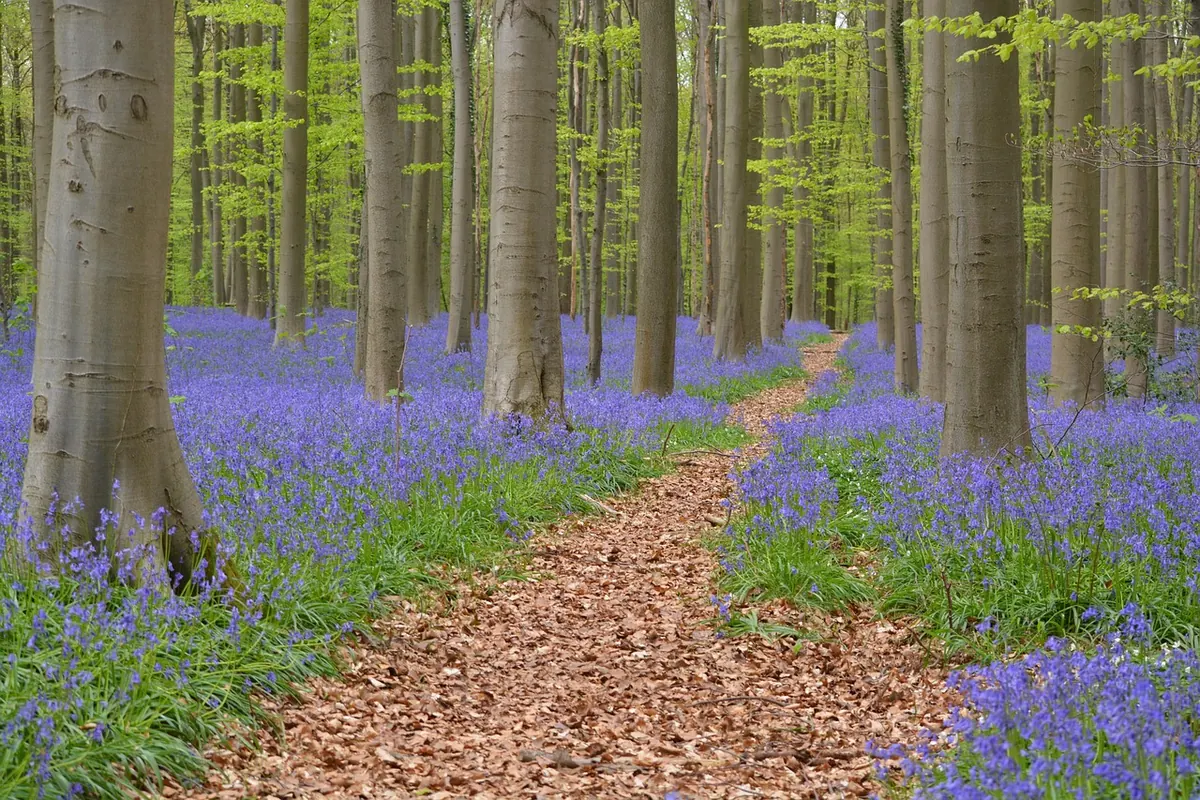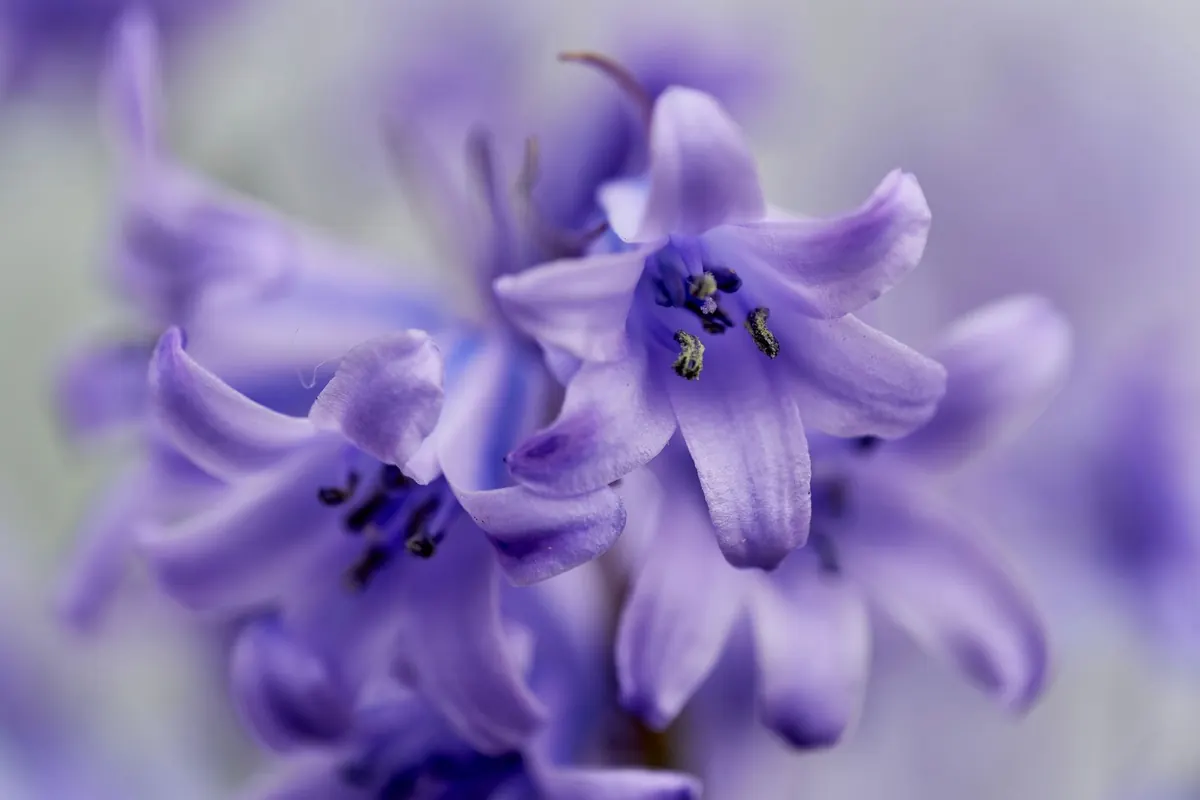
Bluebells belong to woodland, so growing them in a pot can feel like a cheat. They don't seem to mind. Give them a deep container, a loam-based compost and a cool corner that catches a few hours of dappled light, and they'll return each spring with that unmistakable blue-violet haze and a scent like sweet, faint honey.
What separates a pot that flowers once and fizzles from one that thickens up year after year comes down to a handful of details. Bluebells spend most of the year underground, so almost everything that matters happens out of sight, in the bulb and its roots.
Start With the Right Bluebells
Two plants share the name. Our native bluebell, Hyacinthoides non-scripta, carries nodding bells on one side of the stem, with narrow, curled-back petal tips and a strong scent. Spanish bluebells (H. hispanica) stand more upright, with paler, larger, unscented bells. Garden hybrids sit somewhere between the two, and most unnamed bulbs sold cheaply are hybrids or Spanish.
If you garden near woodland or countryside, grow the native kind. Spanish and hybrid bluebells cross freely with natives and have diluted wild populations across Britain, so keeping them out of a pot on a rural balcony is a small kindness to the woods down the lane.
Whatever you choose, buy from a nursery rather than digging plants from the wild. In Britain it's an offence to uproot wild bluebells without the landowner's permission, and lifted wild bulbs rarely settle anyway. You have two options at the till: dry bulbs in autumn, or pot-grown plants sold "in the green" in spring while in leaf. In-the-green plants establish fastest and usually flower the following spring.
Choose a Pot With Depth and Drainage
Bluebell bulbs sit deep, so a shallow bowl won't do. Aim for a container at least 25cm deep, and 30cm if you can manage it. Width matters just as much: bluebells multiply, and a generous pot lets the clump spread instead of strangling itself.
Drainage holes are non-negotiable. Stand the pot on feet or bricks so water escapes freely rather than pooling underneath, and skip the layer of crocks at the bottom, which does more to block drainage than help it.
On material: terracotta breathes but dries out fast in sun; glazed ceramic holds moisture better and looks the part; plastic is cheap and light, which on a windy balcony is a drawback as much as a virtue. Whichever you pick, choose frost-proof. Cheap pots crack in a hard freeze, and a cracked pot full of bulbs is a spring disappointment.
One practical caution on balconies: compost is heavy when saturated. A very large pot, a couple of them grouped together, adds up quickly, so be sensible about what your structure can safely carry and place pots over supporting walls where possible.
Compost and Planting
Bluebells want a soil that holds moisture without sitting wet. A loam-based compost such as John Innes No. 2, loosened with a couple of handfuls of grit or fine bark, suits them well. Ordinary multipurpose alone is too light, dries out too quickly and collapses into a sludgy mass by midsummer. Mix roughly two parts loam-based to one part multipurpose if you want to stretch it.
Stir in a slow-release fertiliser or a small handful of blood, fish and bone at planting. Skip anything high in nitrogen, which pushes leafy growth at the expense of flowers.
Planting dry bulbs
Autumn is the time, from September through November. Set bulbs 10–15cm deep, pointed end up and 8–10cm apart, then water them in. Planted closer, they'll give a fuller first spring but need dividing sooner.
Planting in the green
Spring-bought plants go in at the same depth they were growing in their nursery pot. Tease out the roots, firm them in and water well. Don't let them dry out for the first fortnight.
Layering a woodland pot
In a deep container you can stack bulbs for a longer season: bluebells at the bottom, then a layer of compost, then crocus or snowdrops nearer the surface. Finish with a centimetre of grit across the top, which deters mice and squirrels from digging and keeps the neck of the bulbs dry.
Watering: Wet Spring, Dry Summer
From the moment shoots break the surface until the last flower fades, keep the compost consistently moist. A bluebell that dries out in full growth sets no flower for the following year, and it won't tell you until next spring.
After flowering, keep watering until the leaves begin to yellow, then ease off. Through summer the bulb rests, and the commonest mistake is to keep the pot watered out of habit. Damp compost in a warm dormant pot encourages rot. Let it dry to barely moist, and if the pot stands in baking sun, move it into shade for July and August.
Watering resumes in autumn as roots start to grow again. Rain usually handles it, but pots against a wall sit in a rain shadow, so check them after a dry spell. On a covered balcony, you're the rain.
After the Flowers Fade
Deadhead as the petals drop, particularly if native bluebells grow anywhere nearby, since seed from Spanish or hybrid plants can spread into the wild.
Then leave the foliage alone for at least six weeks. It looks tatty, and every instinct says tidy it, but those leaves are manufacturing next year's flower. Don't cut them early and don't tie them in knots. Wait until they've yellowed and pull away with a gentle tug.
While the leaves are still green, feed every fortnight with a high-potash liquid feed, the sort sold for tomatoes. In a container, this is the single most useful thing you can do for repeat flowering.
Overwintering Bluebells in Pots
Bluebells are fully hardy and need cold to flower well, so don't bring pots indoors or into a heated greenhouse. What they dislike is wet compost combined with repeated freezing and thawing, which rots bulbs and splits containers.
- Move pots to a sheltered spot against a wall, out of the worst wind and driving rain.
- Stand them on feet or bricks so drainage stays clear, and empty any saucers.
- Wrap terracotta and glazed pots in bubble wrap or hessian, or slip the pot inside a larger one with straw or bark packed in the gap.
- In very cold areas, plunge the pot into the ground up to its rim, or sink it into a heap of leaf mould.
- Group small pots together so they insulate one another.
- Check after storms that nothing has waterlogged or toppled.
A pot that freezes solid isn't automatically a disaster, since the bulbs are used to frozen ground. The danger is sitting in sodden compost for weeks on end.
Refresh, Divide, Repeat
Every two or three years, in late summer or early autumn, tip the pot out and break up the clump. Crowded bulbs produce plenty of leaf and very few flowers, which is the usual reason a once-happy pot goes quiet.
Replant the plumpest bulbs at the correct depth in fresh compost, spacing them out, and give the surplus away. If repotting isn't practical this year, at least scrape off the top few centimetres of old compost and top-dress with fresh, plus a little slow-release feed.
Keep the pot in dappled shade with cool roots, don't let it dry out in spring, and deadhead in early summer. Do those three things and a single pot of bluebells will quietly fill out, year after year, until the flowers are thick enough to scent the whole patio.
Photo: WJ Y / Pexels