You can plant a hundred bluebell bulbs in October and still be staring at bare soil in April. The bulbs themselves are tough; the mistakes happen above ground, in the decisions we make about depth, timing and what gets cut when. Some of those habits come from growing daffodils, others from a tidy-up instinct that bluebells simply don't share. Fix the handful of things below and a patch will look after itself for decades, creeping a little further out each spring.
Planting Too Shallow
Bluebell bulbs are bigger than most people expect, and they need more soil over their heads than a tulip or a crocus. Aim for roughly 10cm of cover above the top of the bulb, or about three times the bulb's own height. Plant them shallower and three things follow: frost lifts them toward the surface, the bulbs dry out during summer dormancy, and the flower stems flop sideways in spring just as they come into their own.
Too deep is a rarer problem, but it exists. Buried much below 15cm in heavy clay, shoots can struggle in a cold, wet spring. On light sandy ground, err slightly deeper, because it dries out faster. If you're planting a drift, dig a trench rather than individual holes — 10cm deep, bulbs set 10 to 15cm apart, pointy end up, then cover, water once and leave them alone. Check the orientation as you go; a bulb planted upside down usually still grows, but it wastes energy pushing the shoot the long way round.
Planting at the Wrong Time — or Leaving Bulbs in the Packet
Bluebells are not daffodils when it comes to storage. Dry bulbs left in a warm room for a few weeks lose condition quickly, and bulbs bought for a spring planting often produce mould, a couple of leaves and no flowers at all. The reliable window is autumn, from September into November, while the soil is still warm enough for roots to form before the cold arrives.
If you miss that window, look for bulbs sold "in the green" — lifted with their leaves attached in spring while they are still growing. These settle in fast and often flower the following year. Plant them the day they arrive, water them in, and keep an eye on them through their first dry spell.
Mixing Spanish Bluebells With Native Ones
Spanish bluebells (Hyacinthoides hispanica) are vigorous, tolerant of sun and dry soil, and spread by both seed and offsets. They also cross freely with our native bluebell, and the resulting hybrids gradually crowd out the original. If you want a native-flavoured wood or wildflower lawn, keep the two apart, and be honest about what is already growing in your borders.
Learn to tell them apart before you dig anything out:
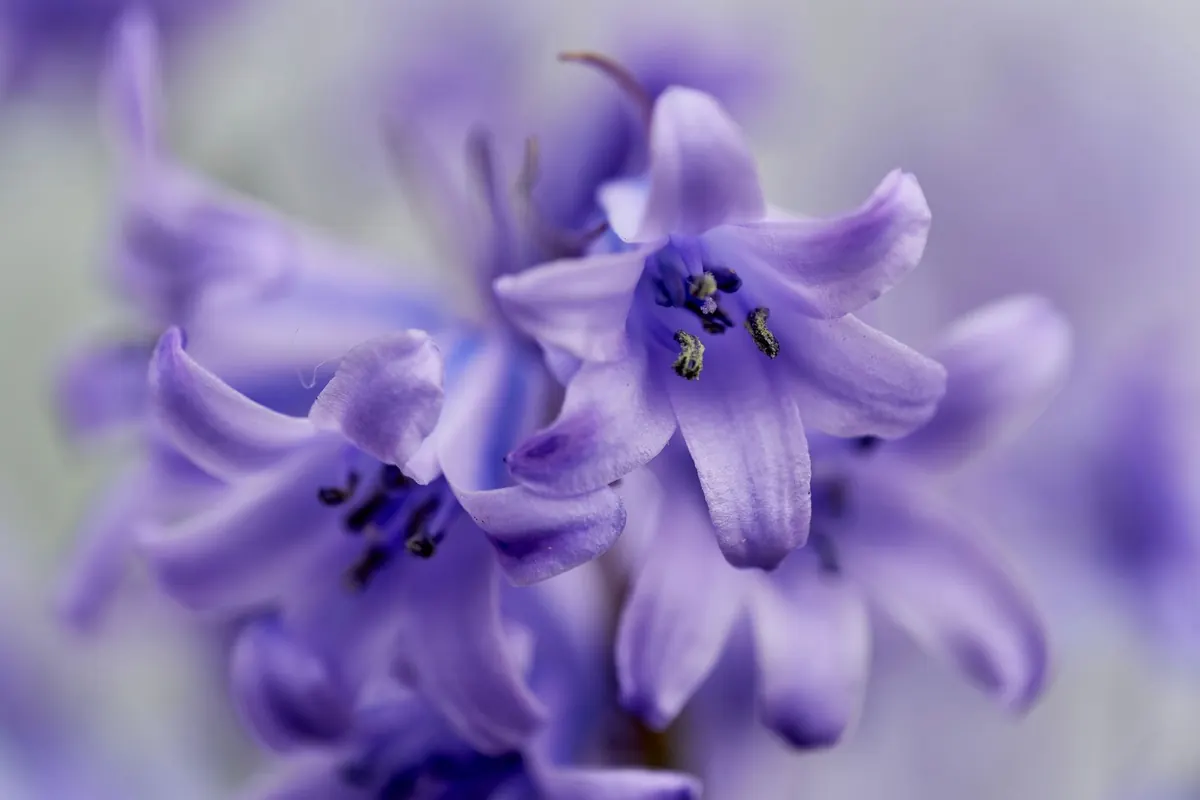
- Native bluebell: deep violet-blue, narrow leaves around 1cm wide, flowers mostly on one side of a nodding stem, sweetly scented, with creamy white anthers.
- Spanish bluebell: paler blue, pink or white, broad leaves 2 to 3cm across, flowers all the way round a stiffly upright stem, little or no scent, usually with blue anthers.
- Hybrids: somewhere in between, and the ones most often found in mixed trays at garden centres.
Shallow digging will not remove Spanish bluebells. Fork out the whole clump, follow the bulb down as far as it goes, then work through the soil with your hands for the small offsets that snap off. Bag everything and put it in household waste rather than the compost heap, and expect to repeat the job for two or three seasons.
Mowing or Cutting Back Too Early
After flowering, bluebell leaves keep working for about six weeks, storing energy for next year's bulb. Cut them down in May and you get a thinner display the following spring — and a thinner one again the year after that. The signal to mow is colour, not the calendar: wait until the leaves have gone yellow and flopped flat, usually late June or early July.
If the garden needs to look tidy before then, mow paths and edges around the clumps, raise the blade for the first cut so you don't scalp the soil, and leave the seed heads standing if you want the patch to spread. Mark the clumps with a short cane while the leaves are still visible; once they vanish in early summer, it's remarkably easy to forget exactly where they were.
Choosing the Wrong Spot
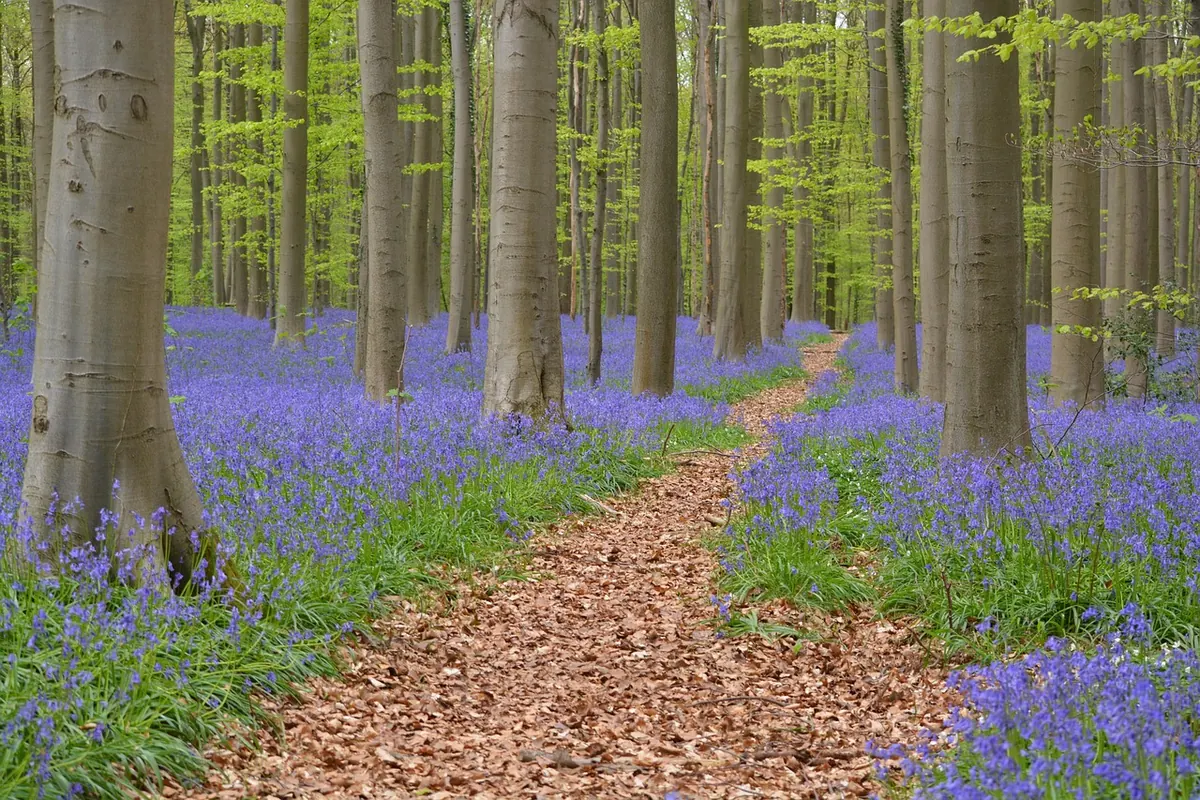
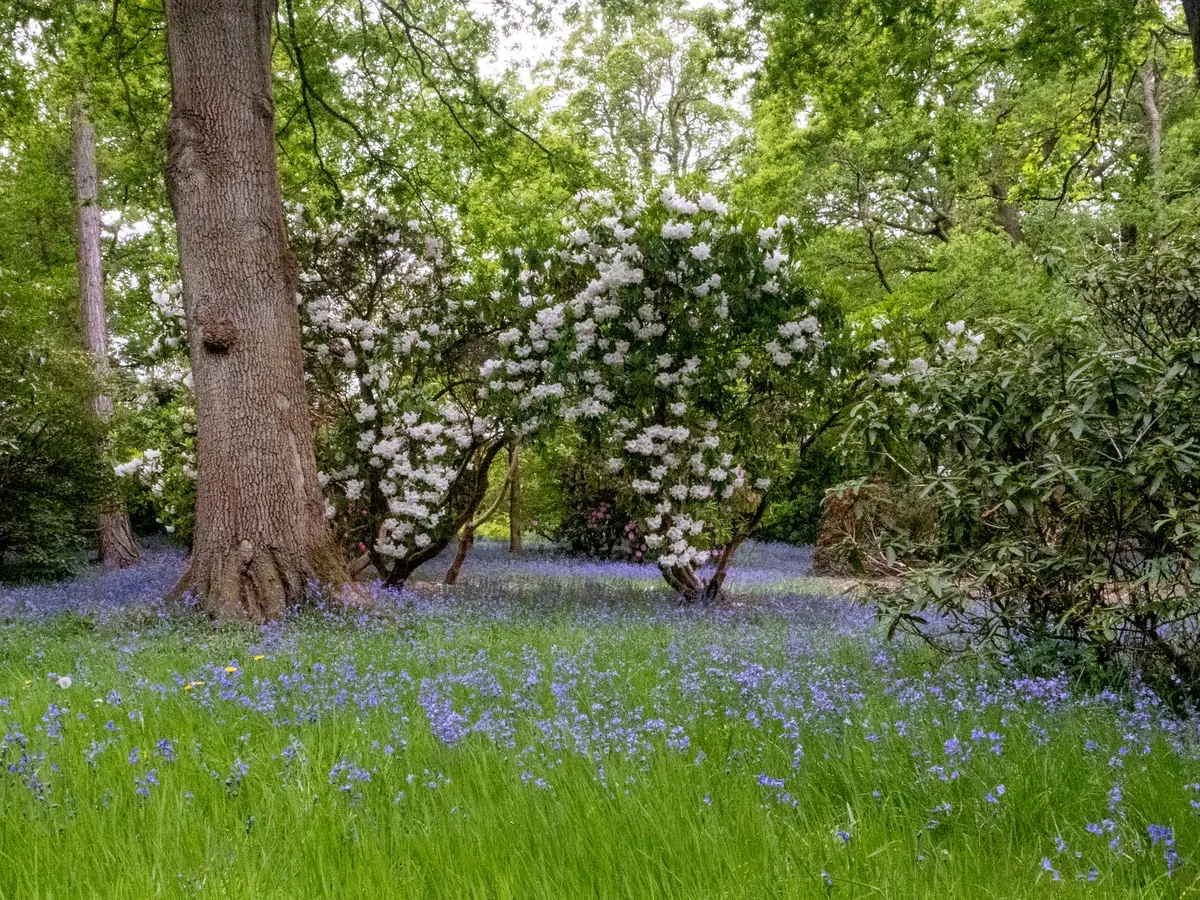
Bluebells want woodland floor conditions: dappled shade in spring, good light while they leaf and flower, then soil that dries out a little once they go dormant in summer. That describes the ground under deciduous trees and shrubs almost perfectly. The classic mistake is planting them in deep, dry shade under conifers or against a rain-shadowed wall, where they flower once and fade away. The opposite error is baking them in full sun on thin sandy soil.
Wet, heavy clay is the third trap. Bulbs sitting in waterlogged ground over winter simply rot. Work in leaf mould or garden compost, plant on a slight ridge, or grow them in a raised bed beneath a shrub. Bluebells will take sun as long as the soil stays moist through spring, so a north- or east-facing border is often a better bet than a hot south-facing one.
Planting Too Few Bulbs, Too Far Apart
One bluebell is a curiosity; twenty is a drift. Plant in groups of at least 20 to 30 bulbs, spaced 10 to 15cm apart, in irregular shapes rather than neat rows. Bluebells look convincing when they run into each other and the edges blur. If you want them to spread by seed, leave the pods to ripen and fall, and accept that seedlings need a cold, damp spell to germinate and several years to reach flowering size. It is a slow route, but it is how a planting starts to look natural.
Digging Them Up — and Tidying Too Hard
Established bluebells do best when left undisturbed. Lifting and storing bulbs over summer in a shed or box is one of the quickest ways to lose them, either to drying out or to rot. It is also easy to dig into a dormant clump while planting something else, or to clear a bed and take the bulbs with it. Mark the spot, resist the urge to reorganise, and don't smother the area with a thick layer of mulch; a light dressing of leaf mould in autumn is plenty.
Finally, never lift bluebells from the wild to stock your garden. In the UK you need the landowner's permission to dig up wild plants, and it is generally an offence without it. Buy cultivated native stock from a nursery that sells it, and your patch will be both legal and better adapted to garden conditions.
The Ten Mistakes at a Glance
- Planting bulbs with less than 8 to 10cm of soil over them.
- Setting bulbs the wrong way up in the trench.
- Buying dry bulbs for a spring planting.
- Leaving bulbs sitting in the packet for weeks.
- Mixing Spanish bluebells and hybrids with native ones.
- Mowing before the leaves have yellowed.
- Planting into deep dry shade or waterlogged clay.
- Scattering a handful of bulbs across a large area.
- Lifting and storing bulbs through the dormant months.
- Burying dormant clumps under a heavy mulch.
Get the depth, the timing and the neighbours right, and you can more or less forget about bluebells. They will reward you with the same drift, a little wider, every April.
Photo: Bob Jenkin / Pexels