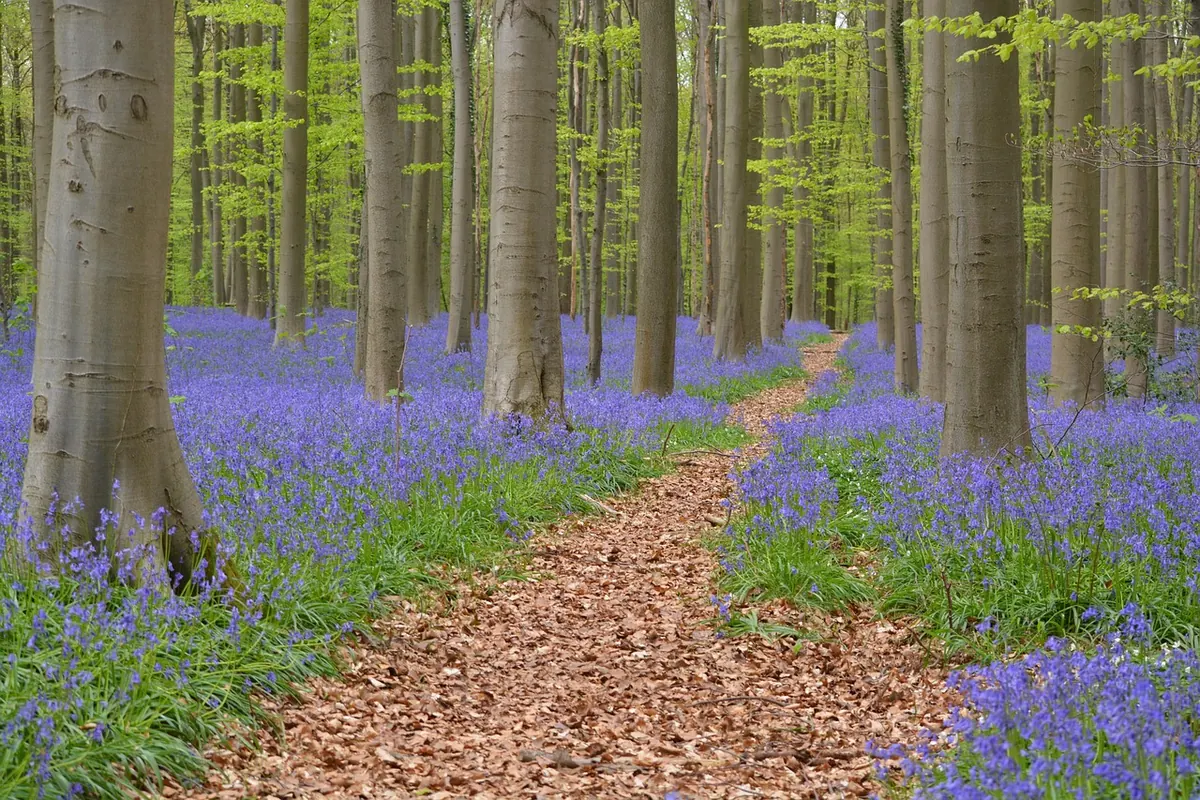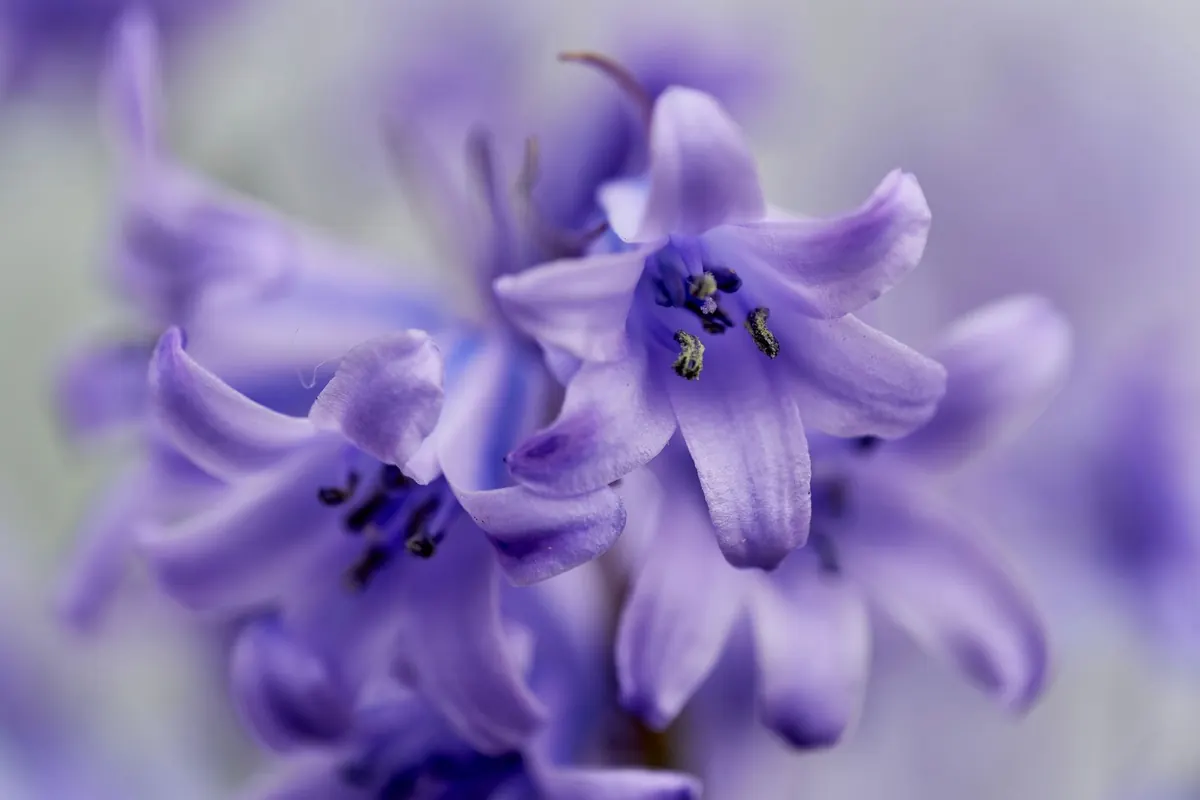
You wait all spring for that haze of violet under the apple tree, and what you get instead is a green carpet of leaves that never produces a single flower. It happens to almost every bluebell grower at some point. Bluebells are generous plants when their few basic needs are met, and stubborn when one of them is missing. The trick is working out which one.
Start now, while the leaves are still visible. By midsummer the evidence will have vanished underground.
Read the Leaves Before You Touch Anything
Before you dig, feed or water, spend five minutes actually looking at what came up. The foliage usually points to the cause.
- Strong green leaves, no flower spike anywhere. The bulb is alive but hasn't reached flowering size — usually age, crowding, shade or a dry spring last year.
- Pale, floppy leaves that collapse early. Too dark, too wet, or the foliage was cut back too soon in a previous season.
- Thin grassy leaves packed shoulder to shoulder. Overcrowding. The clump is slowly starving itself.
- Buds that form and then shrivel. Drought in April or May, or a late hard frost.
That first category is the most common, and it covers four separate causes. Work through them in order.
Too Much Shade, or the Wrong Kind of Shade
Bluebells are woodland plants, but "woodland" doesn't mean gloom. They want bright, dappled light from the moment the leaves break ground until roughly six weeks after flowering. That window is when the bulb refills its reserves and sets next year's flower bud.
A spot under a deciduous tree is ideal — the bluebells finish their work before the canopy closes overhead. Deep shade from evergreens, a north-facing wall or the dense skirt of a mature shrub is not. You'll get leaves that stretch thin and pale, then fade without ever building enough energy to bloom.
Fixes are simple but slow: thin out the lowest branches of the tree above, cut back the shrubs that overshadow the clump, or lift the bulbs and move them somewhere brighter. Move them in the green, immediately after flowering while the leaves are still on, and water them in well.
Crowded Clumps and Bulbs That Are Still Young
Clumps that have jammed themselves together
A healthy bluebell clump doubles in density every few years. Eventually the bulbs sit on top of one another, competing for the same crumbs of moisture and nutrients. Leaves stay small, flowers get smaller, then stop appearing altogether. Lift the whole clump after flowering, tease the bulbs apart, and replant the plumpest ones roughly 8–10cm apart. Replant at the same depth they were growing. Small offsets can go into a nursery bed or a pot to grow on.
Bulbs that simply aren't old enough
Bluebells grown from seed can take four or five years to reach flowering size, and the small offsets you get when dividing a clump need two or three. If you planted seed or tiny bulbs a couple of seasons ago and got leaves, that's a success, not a failure. Buy the largest, firmest bulbs you can find if you'd rather not wait, and remember that bargain bins full of shrivelled small bulbs take years to catch up.
Water: Both Too Little and Too Much
Bluebells do their growing in late winter and spring, which is also when gardeners are least likely to water anything. A dry April and May is enough to abort buds or stop them forming at all, especially on sandy soil or in the rain shadow of a wall or hedge. If the weather turns dry while the leaves are green and the buds are swelling, water deeply once a week rather than sprinkling daily.
The opposite problem is just as damaging. Bulbs sitting in waterlogged clay through winter will rot. You'll often smell it before you see it: soft, brown, hollow bulbs when you finally dig them up. Improve heavy soil with garden compost and grit, or plant in a raised bed. Bluebells tolerate a lot, but not standing water.
Foliage Cut Too Early, and Bulbs Planted Too Shallow
This is the mistake most people make without realising it. The leaves are ugly once the flowers fade, so out come the shears or the mower. But those collapsing leaves are the bulb's solar panel, and next year's flower is being built inside it. Leave them for at least six weeks after flowering, ideally until they have yellowed and flopped on their own. Don't tie them in knots to tidy them up — that just reduces the leaf area catching light.
Planting depth matters too. A bluebell bulb wants to sit roughly two to three times its own height below the surface, which usually means around 8–10cm of soil over the top, tip pointing up. Shallow bulbs heave out of the ground in frost, dry out in summer and flower poorly or not at all.
Pests, Rot and Root Disturbance
Squirrels and mice dig up bulbs, particularly in freshly planted beds where the soil is loose and easy. Firm the soil, lay a sheet of mesh over the patch until the ground settles, or plant in a buried basket. Bulb fly larvae hollow out bulbs from the inside; if you dig one up and it feels soft and empty, bin it rather than replanting it. Slugs nibble young shoots but rarely kill a clump.
Disturbance is its own quiet cause. Virginia bluebells in particular resent having their roots messed with and will often sulk for a full season after being moved, producing leaves and nothing else. If you divided a clump last autumn, give it another spring before you worry.
A Fix-It Checklist for This Season
- Look at the leaves and match them to the list above.
- Clear competing growth — grass, ivy, dense shrubby cover — from around the clump.
- Water in dry spells from emergence until six weeks after flowering.
- Leave the foliage alone until it has yellowed completely.
- Mark the clump with a discreet stick or label so you know where it is in summer.
- Lift, divide and replant overcrowded clumps in the green, right after flowering.
- Top-dress with garden compost in autumn. Skip high-nitrogen feeds, which push leaves at the expense of flowers.
Give It a Year, Then Look Again
Bluebells answer slowly. A bulb that spent this spring building reserves may not flower until next year, and a divided clump often takes two seasons to settle. Fix the most obvious problem first — light and crowding solve most cases — rather than changing everything at once and learning nothing from the result. Then leave them alone, keep the spot marked, and wait. When they do come back, they tend to come back for decades.
Photo: jplenio / Pixabay