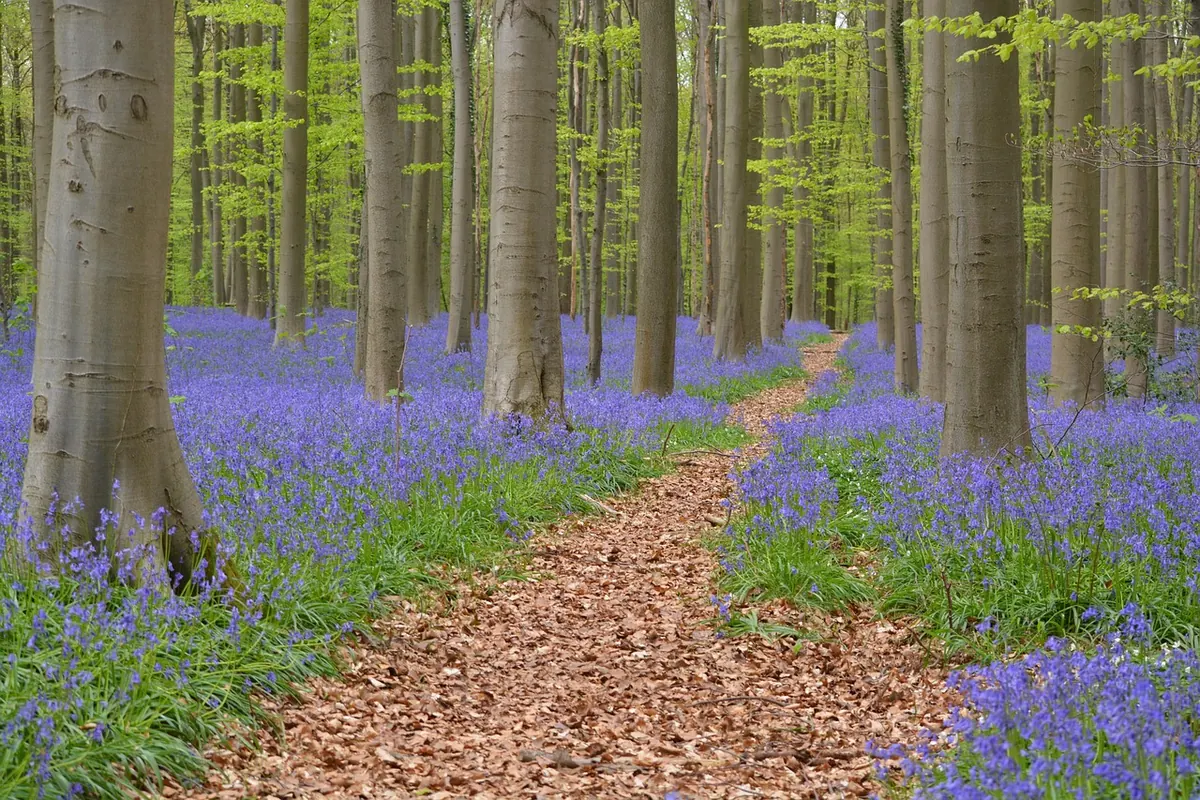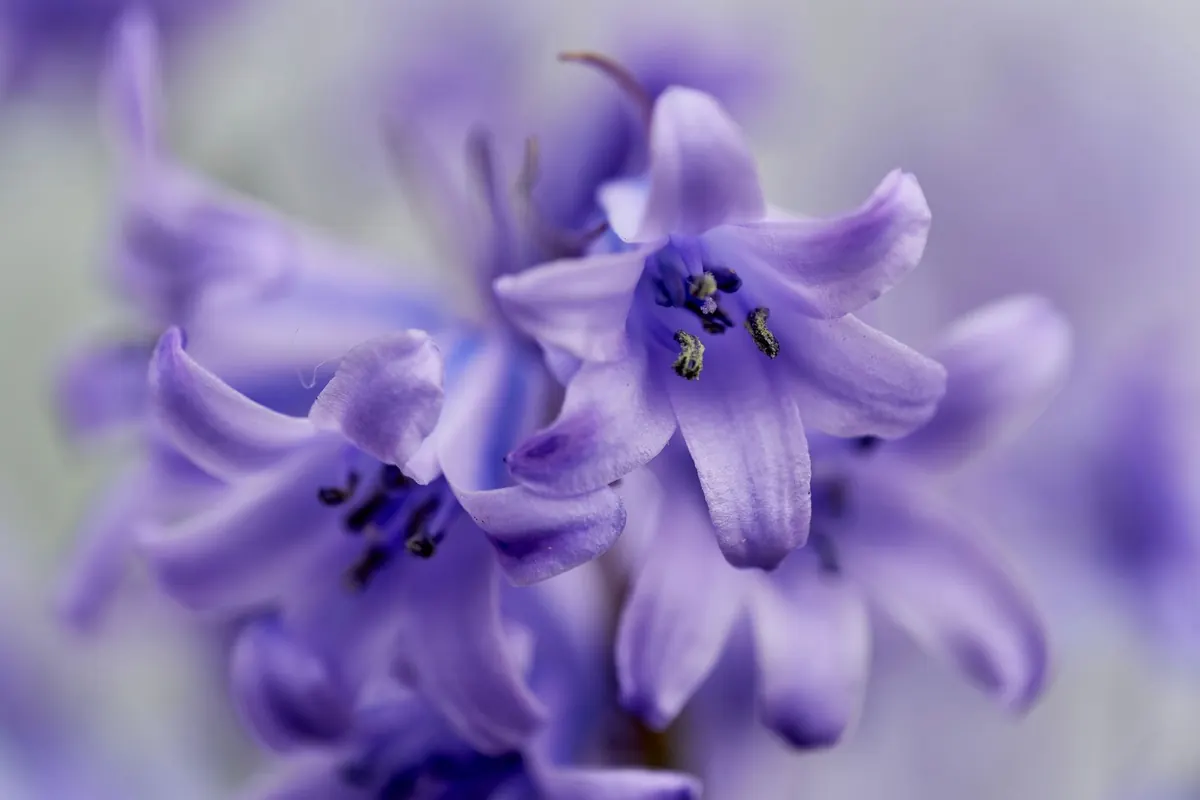
Bluebells don't linger. You wait all year, they flood the ground for three or four weeks, and then the flowers drop and the leaves start to slump. At that point the temptation is to tidy the whole lot away and get on with the summer border. Resist it. The fortnight after flowering is when the bulb does the work that pays for next spring's display, and the choices you make now decide whether you get a thick blue haze or a scattering of leaves.
What follows is the routine that gets bluebells back stronger, whether they're naturalised under trees, tucked into a shady border, or living in a pot by the door.
1. Deadhead the flower spikes, not the leaves
As soon as the petals drop and the seed pods are still green, cut or pinch off the flower stem just above the foliage. Bluebell stems snap easily between finger and thumb, so there's no need to hunt for secateurs unless you're doing a large patch. Left alone, the plant pours energy into ripening seed — and that energy has to come from somewhere, which means it comes out of the bulb.
There's a second reason to be disciplined. If you grow Spanish bluebells or the hybrids that turn up in most gardens, seed spreads them briskly, and they cross with native bluebells while they do it. Cutting the heads off is the simplest way to keep a clump where you planted it.
The exception: if you're trying to establish native bluebells in a wild corner, leave a few seed heads to ripen and drop. Seed is slow but it's how a colony thickens naturally.
2. Water deeply while the leaves are still green
Bluebells are woodland plants. They evolved under trees that shed rain slowly and keep the soil cool, and they're still working on that assumption in your garden. Through late spring and early summer, while the leaves are green and photosynthesising, a dry spell will stop the bulb replenishing itself.
Water thoroughly rather than often — a good soak that reaches the bulb, roughly a watering can per square metre of clump, once a week in dry weather. Aim at the soil, not the leaves. Once the foliage has yellowed and collapsed, stop entirely. Dormant bluebell bulbs sitting in wet summer soil rot surprisingly fast, and that's a much quicker way to lose a clump than drought.
3. Feed once, at the right moment
The best time to feed is right after deadheading, while the leaves are still actively growing. A liquid general-purpose feed or a tomato-type feed diluted as directed is enough; apply it to damp soil so it doesn't scorch roots. Slow-release bulb fertiliser scratched lightly into the surface works too if you'd rather do it in one pass.
Keep nitrogen low. Soft, sappy leaves are more prone to slugs and mould, and you're trying to build a bulb, not a leaf crop. Don't feed after the foliage has died back — there's nothing left to take it up, and the nutrients simply wash away.
4. Let the foliage die back completely
This is the part most people get wrong. Those flopping leaves are solar panels. Cutting them off early removes the bulb's only means of making next year's flowers.
How long to leave them
Six weeks minimum after flowering, eight is better. The leaves are finished when they've gone fully yellow, then straw-brown, and pull away from the soil with a gentle tug. If they resist, they're still working. Wait.
How to live with the mess
Don't knot, braid or tie the leaves back. Anything that bundles them reduces the light they catch, which defeats the point. Hide them instead by planting something that emerges late and fills the gap:
- Hardy geraniums, which spread just as the bluebell leaves flop
- Ferns — soft shield fern and lady fern both do well in the same shade
- Hostas, epimediums and Alchemilla mollis
- Bleeding heart (Dicentra) and Japanese anemone for later in the season
Mark it as untidy for a few weeks and let it be. Brown foliage in June is a small price for blue in April.
5. Mark the clump and leave the soil alone
Once the leaves have gone, bluebells are invisible. That's how they get spiked, hoed or dug up during summer planting. Push in a discreet label or a short cane now, while you can still see where they are, so you don't cultivate over the top of them in August.
If you need to lift and divide a crowded clump, do it when the bulbs are dormant — late summer into early autumn — or in early autumn just as new growth starts. Replant at the same depth, about 10cm down, and water them in. And one firm rule: never dig bluebells from the wild. Buy cultivated bulbs or divide your own.
6. Watch for mould, slugs and thinning
Dense, damp clumps sometimes develop grey, furry mould on the fading leaves. Thin the worst of it out and improve airflow rather than reaching for a spray. Slugs matter more in spring, when the new shoots appear, than after flowering.
If a clump that used to flower well now produces mostly leaves, it's usually overcrowded and the bulbs are competing. Divide it in late summer, replant the best bulbs, and give them a season to settle.
7. Pots and containers need more attention
Bluebells in containers dry out far faster than those in the ground, so check the compost weekly while the leaves are green and water when the top few centimetres feel dry. Feed them a little more often too, since compost nutrients run out quickly in a pot.
After the foliage dies back, move the pot into shade and keep it barely moist — or tip the bulbs out, store them in dry compost or a paper bag somewhere cool and dark, and replant in autumn. Whatever you do, don't leave a pot of bulbs baking in full sun over summer.
The six-week sequence
If you'd rather have it as a rhythm than a rulebook:
- Week 0: flowers fade — cut the spikes off above the leaves.
- Week 1: feed with a balanced or tomato-type liquid feed.
- Weeks 1–6: water deeply once a week in dry weather; plant companions around the clump.
- Weeks 6–8: leaves yellow and collapse. Wait.
- Week 8 onwards: pull away the dead foliage, stop watering, and leave the bulbs undisturbed until autumn.
Do that and you'll barely notice the untidy fortnight in June. What you will notice is a clump that comes back thicker, bluer and earlier each year — which is really the whole point of growing them.
Photo: Shirley810 / Pixabay